How to find Canis Major and Sirius from Orion
Start from Orion: extend its three-star Belt away from Aldebaran. It leads to Sirius, the brightest star in the night sky. Sirius shines in the head of Canis Major, the Greater Dog, whose long body and legs spread beyond it.
- Orion’s Belt
- Sirius
- Canis Major
- 1 / 5
Start at Orion’s Belt
Orion is the easiest constellation to spot on winter evenings. Find its Belt: three bright stars in a short, almost straight row.
Scroll: the sky guides you from star to star. - 2 / 5
Follow the Belt to Sirius
Extend the line of the Belt, away from Aldebaran. It leads to the brightest star in the night sky: Sirius.
- 3 / 5
Notice the distance
Sirius lies several Belt lengths away. Once you get there, its brilliance is hard to miss.
- 4 / 5
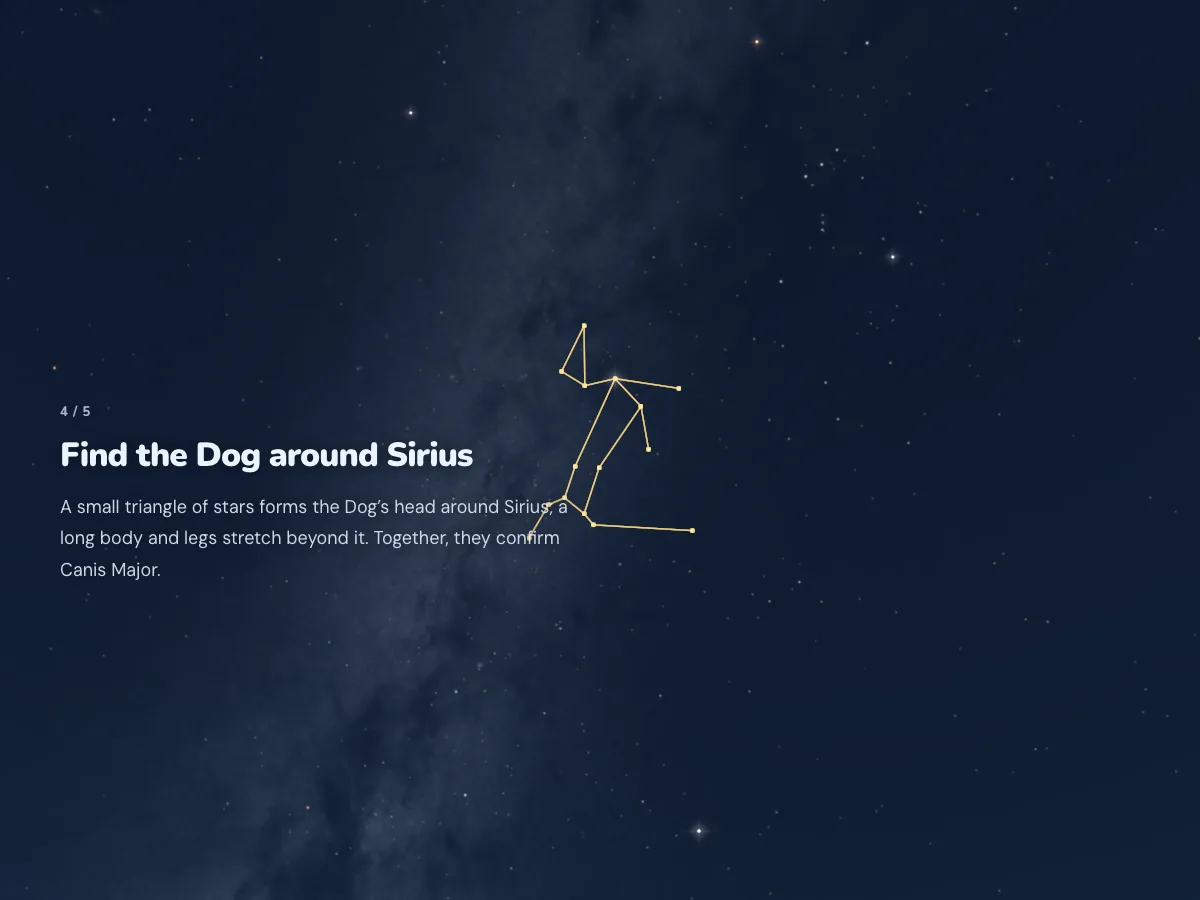
Find the Dog around Sirius
A small triangle of stars forms the Dog’s head around Sirius; a long body and legs stretch beyond it. Together, they confirm Canis Major.
- 5 / 5
Now find Canis Major without help
No lines, no markers. Start at Orion’s Belt, follow it to Sirius, then check the head and the long body.
When to look
Canis Major is well placed on evenings around January to March: winter in the north, summer in the south. From mid-northern latitudes it stays fairly low in the south-east, then the south; from the Southern Hemisphere it climbs much higher.
Avoid this mix-up
A bright planet can rival Sirius. Check the line from Orion’s Belt and the small head triangle rather than brightness alone. Near the horizon, Sirius often twinkles in several colours: that is the atmosphere.
Why is Sirius so bright?
Sirius is about 25 times as luminous as the Sun and one of our nearest stars, roughly 8.6 light-years away. That combination makes it the brightest star in the night sky.

Learn it with Poppot
Practise recognizing the stars, then find your way with your phone in your pocket.
Start learning freeKeep exploring
All guides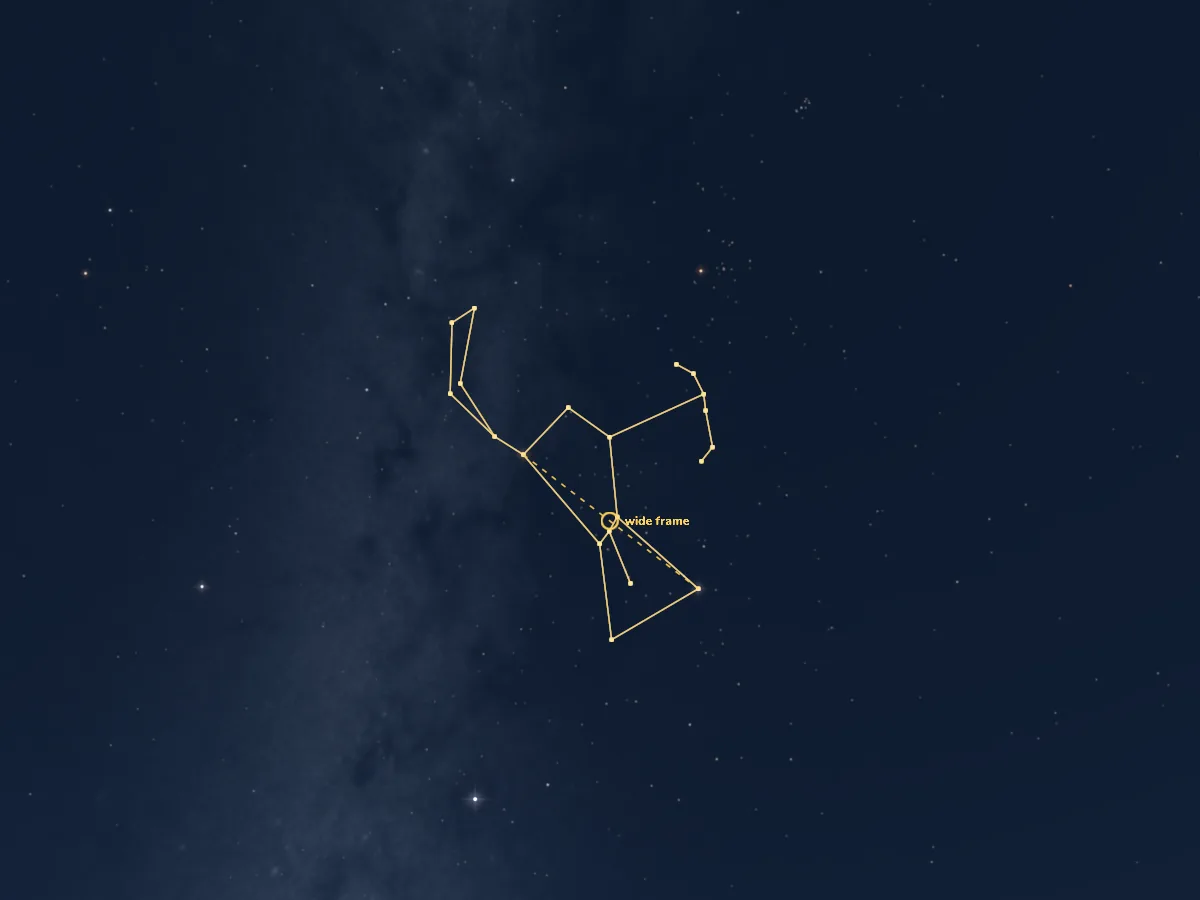
References & image credits
Editorial check: 31 October 2026 · Poppot
A reference view, not the sky above your location right now. The orientation changes with your location and the time. About the sky map →
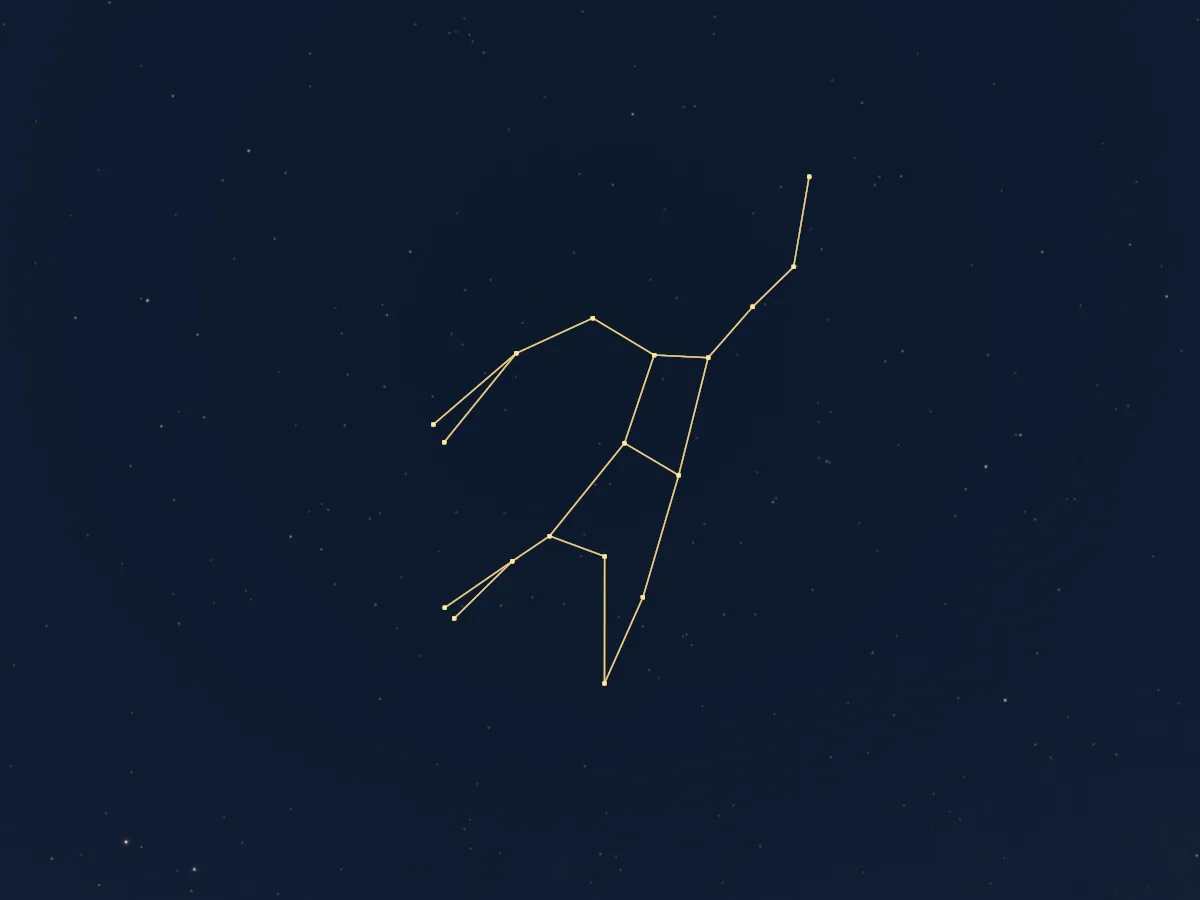
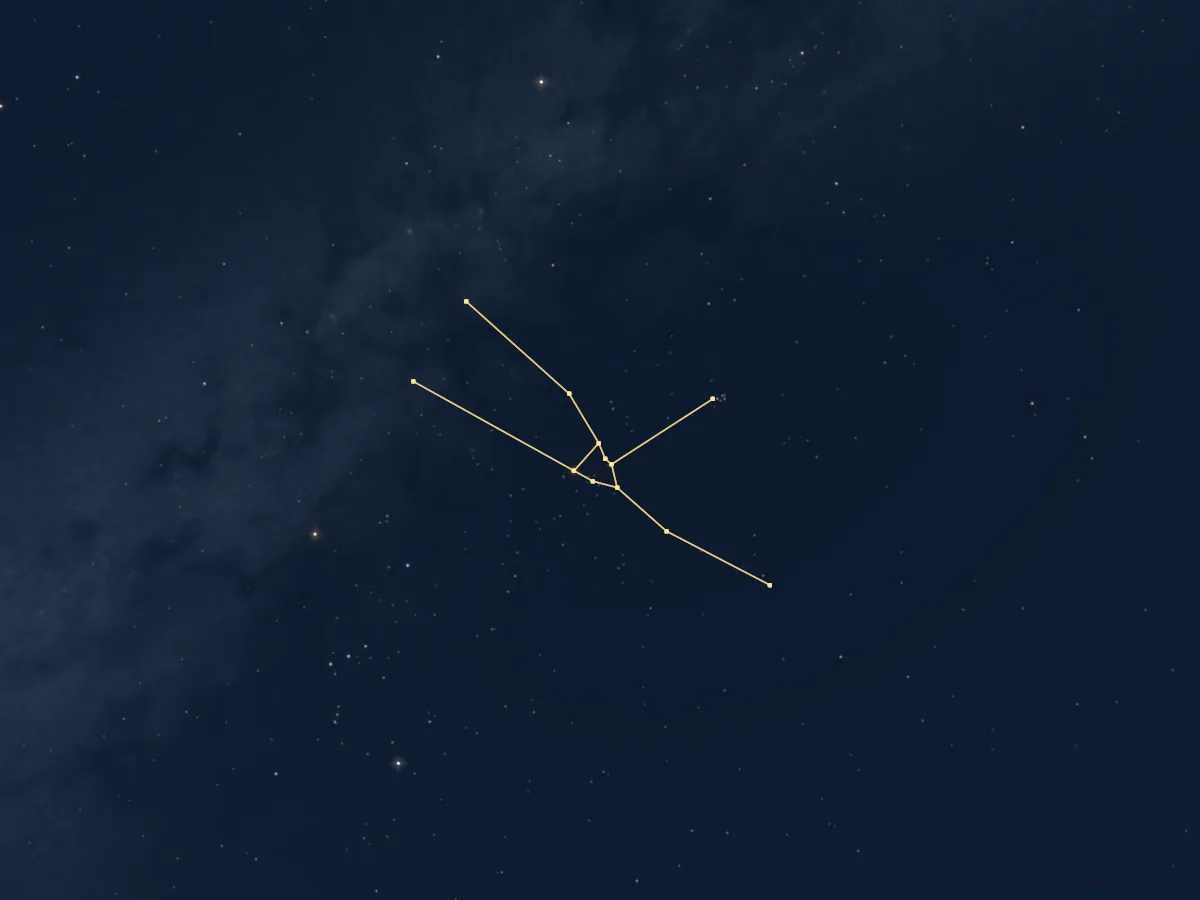
The guided sky reuses the app’s lesson: HYG catalogue, observing night, camera route and constellation figures. Figures are teaching aids, not official constellation boundaries.