How to find Orion in the night sky
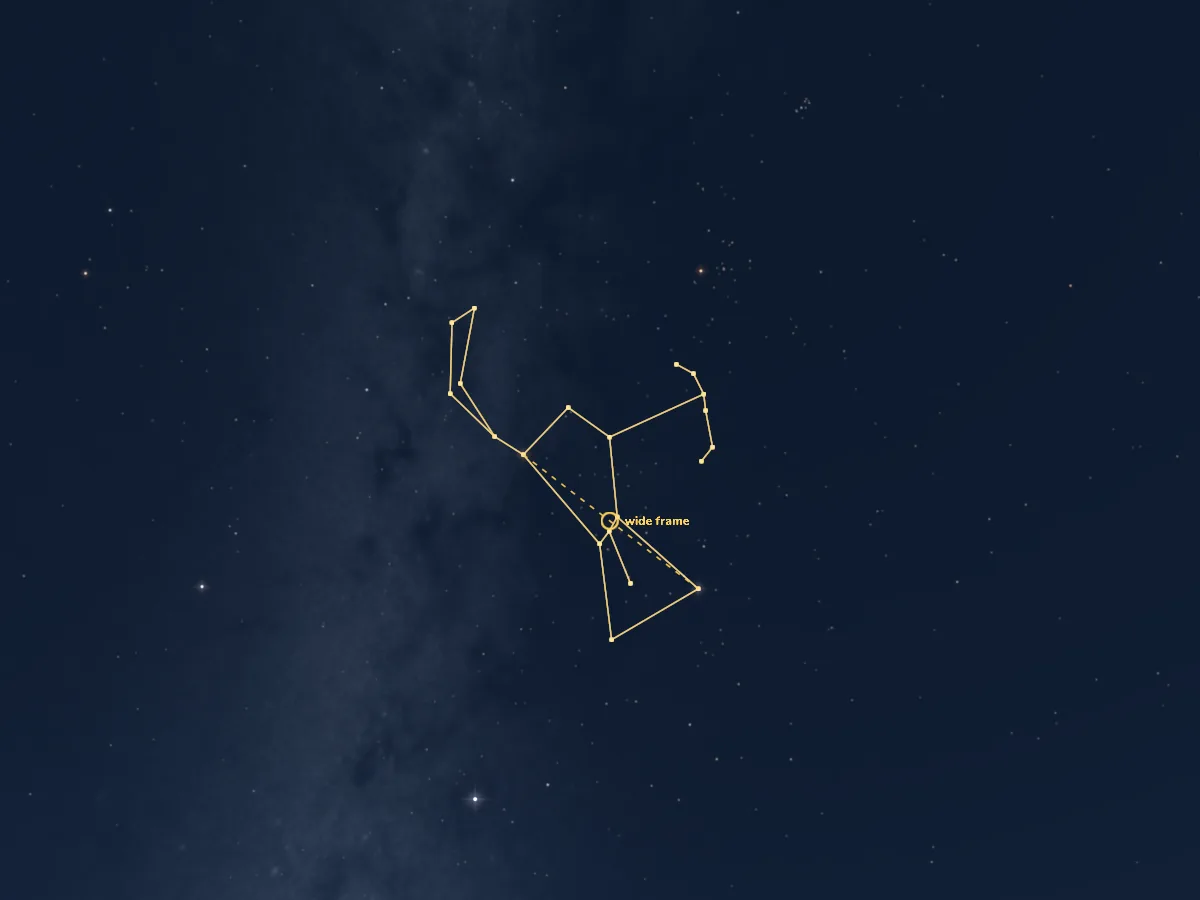
Look for three fairly bright, closely spaced stars in an almost straight line: Orion’s Belt. Two stars mark the shoulders and two mark the feet. This central pattern is a better starting point than the complete Hunter drawing.
- Southern horizon
- Belt
- Betelgeuse & Rigel
- Orion
- 1 / 4
Look south, above the horizon
On a winter evening north of the equator, Orion stands over the southern horizon. Start there, a little above the ground, while your eyes adjust to the dark.
Scroll: the sky guides you from star to star. - 2 / 4
Find three stars in a short row
The Belt is the key: three fairly bright stars, close together and almost evenly spaced. In the real sky it looks smaller than on most charts, so look for a compact row.
- 3 / 4
Frame it with Betelgeuse and Rigel
On either side of the Belt, orange Betelgeuse marks a shoulder and blue-white Rigel the opposite foot, each several Belt lengths away. Add the neighbouring stars and the whole Hunter appears.
- 4 / 4
Now find Orion without help
The lines and markers are gone; the stars have not moved. Start from the Belt, then reach Betelgeuse and Rigel. Scroll back up whenever you need the route again.
When to look
Orion is a good evening target around December to March: northern winter and southern summer. These are seasonal pointers, not a promise for every latitude. Wait for a dark sky and a reasonably high view.
Avoid this mix-up
Orion can be tilted or upside down compared with a chart. Learn the stars’ arrangement, not a character that must stand upright.
Can you see Orion from both hemispheres?
Yes, from much of both hemispheres. Its altitude, orientation and viewing times depend on latitude and date.

Learn it with Poppot
Practise recognizing the stars, then find your way with your phone in your pocket.
Start learning freeKeep exploring
All guides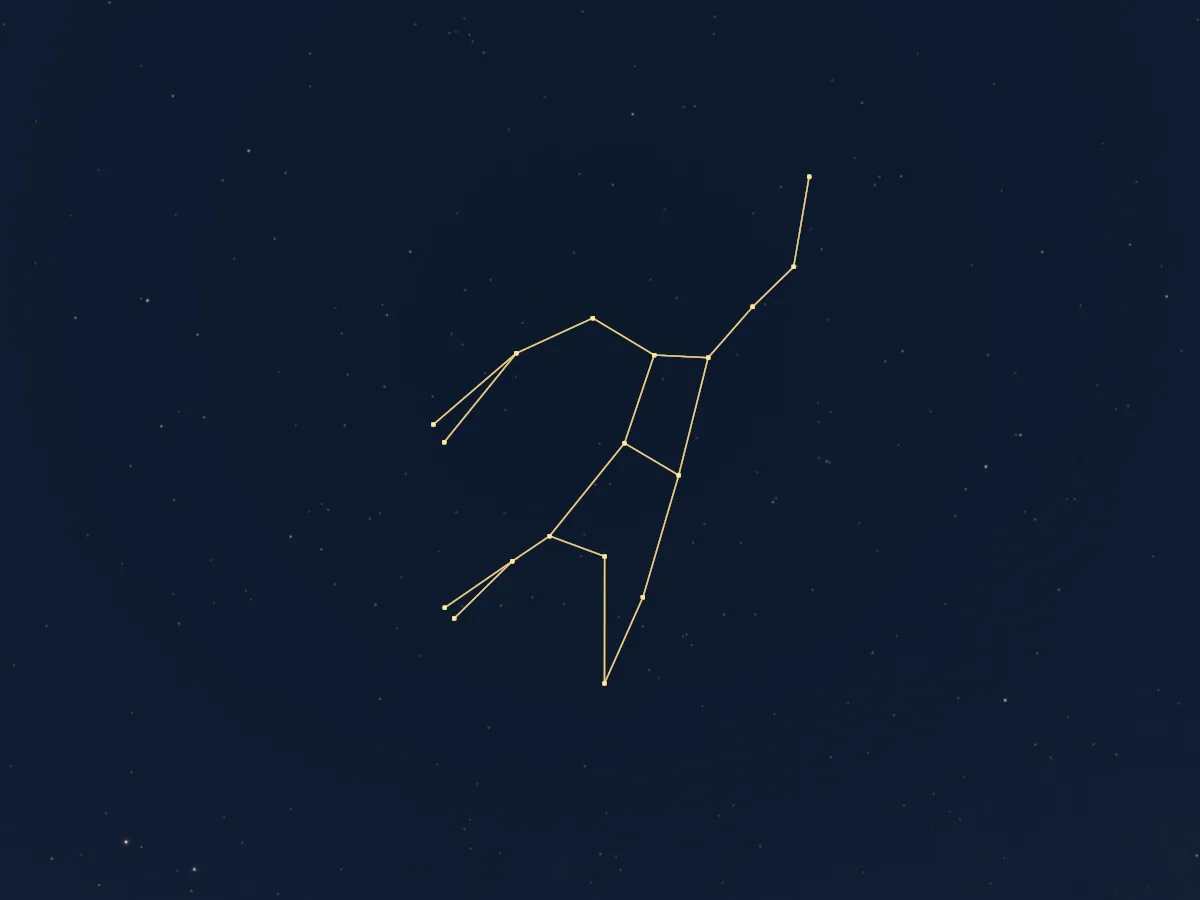
References & image credits
Editorial check: 31 October 2026 · Poppot
A reference view, not the sky above your location right now. The orientation changes with your location and the time. About the sky map →
The guided sky reuses the app’s lesson: HYG catalogue, observing night, camera route and constellation figures. Figures are teaching aids, not official constellation boundaries.