How to recognize the Southern Cross
Look for a compact bright cross in the southern sky. Its long axis runs from Gacrux to Acrux; another pair forms the crossbar. Nearby bright Alpha and Beta Centauri help confirm the region.
- Alpha Centauri
- Hadar
- Southern Cross
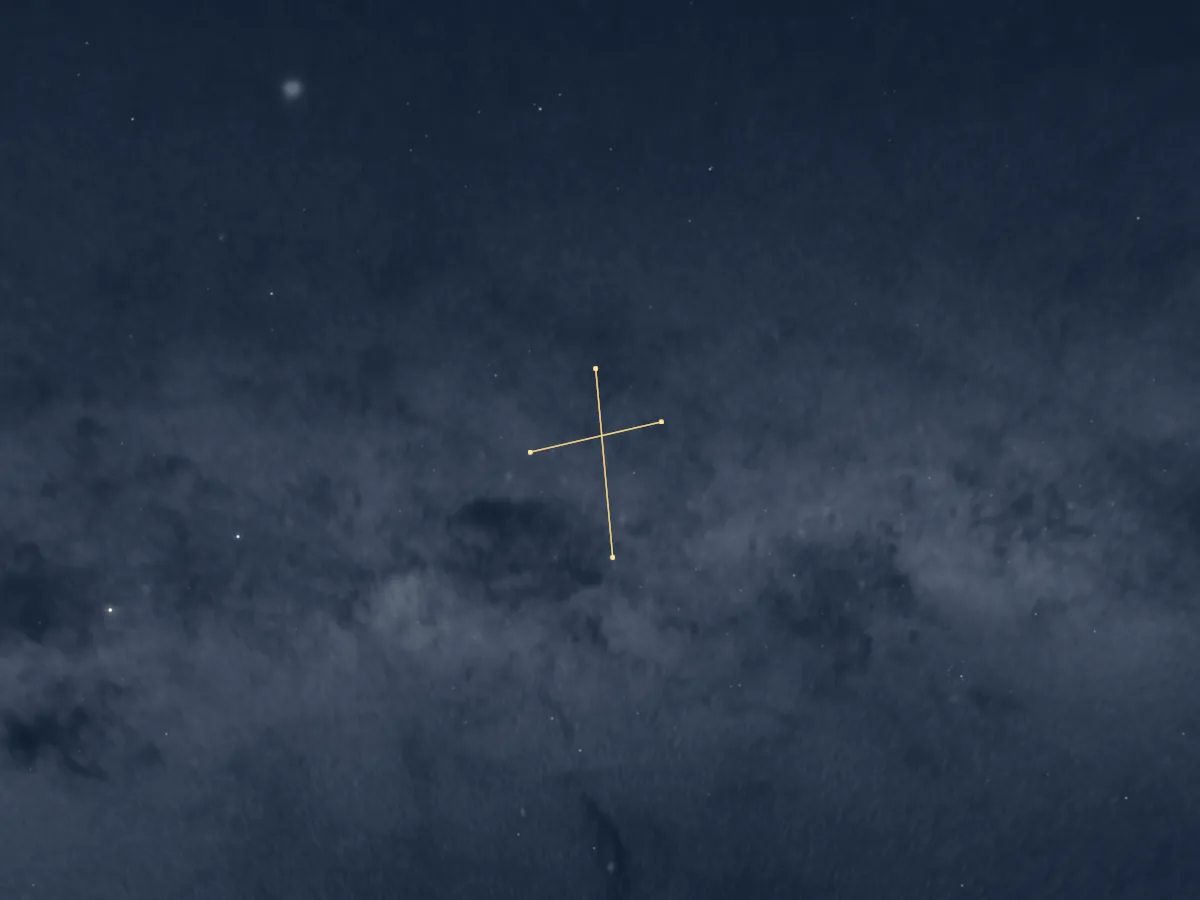
- 1 / 4
Start with the two Pointers
In the southern sky, Alpha Centauri and Hadar shine side by side: two very bright stars in Centaurus, easy to spot.
Scroll: the sky guides you from star to star. - 2 / 4
Follow the Pointers to the Cross
Extend the line from Alpha Centauri through Hadar. It leads to a small, bright cross.
- 3 / 4
Check the unequal cross
From Gacrux to Acrux, the stem is long; the crossbar is shorter. The larger, dimmer False Cross nearby has no bright Pointers beside it.
- 4 / 4
Now find the Southern Cross without help
No lines, no markers. Start at the two Pointers, follow them to the small cross, then check its long stem.
When to look
The Southern Cross is a Southern Hemisphere landmark. Evenings around April to June are often convenient from mid-southern latitudes. It is not visible from mainland France; near the northern tropics it stays low and seasonal.
Avoid this mix-up
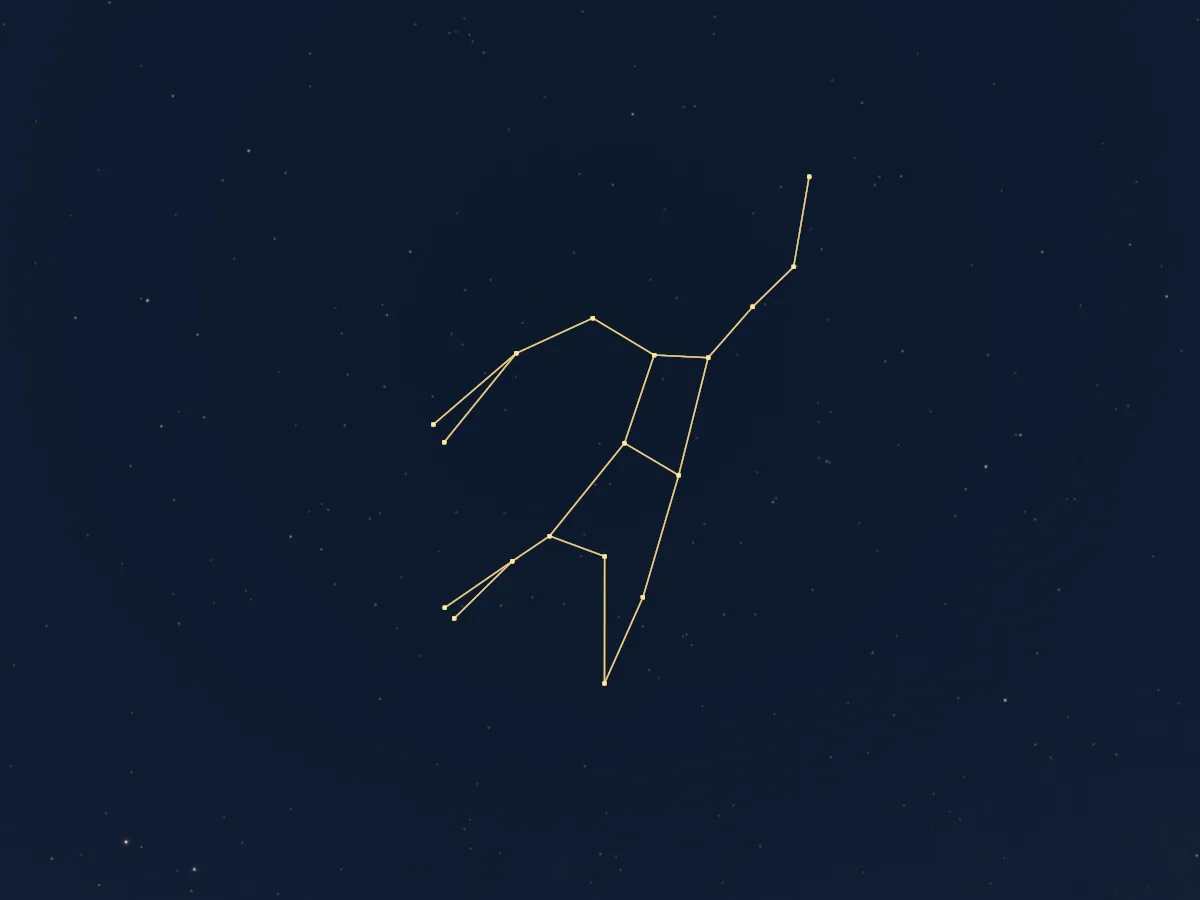
The larger False Cross is another star pattern. The celestial pole is not on the horizon: drop from the pole towards the horizon to estimate geographic south.
How can the Southern Cross help you find south?
Extend from Gacrux through Acrux, then beyond Acrux by about four and a half times the long axis. This approaches the south celestial pole, not a place marked by a very bright star. To estimate geographical south, drop from the pole down to the horizon.

Learn it with Poppot
Practise recognizing the stars, then find your way with your phone in your pocket.
Start learning freeKeep exploring
All guides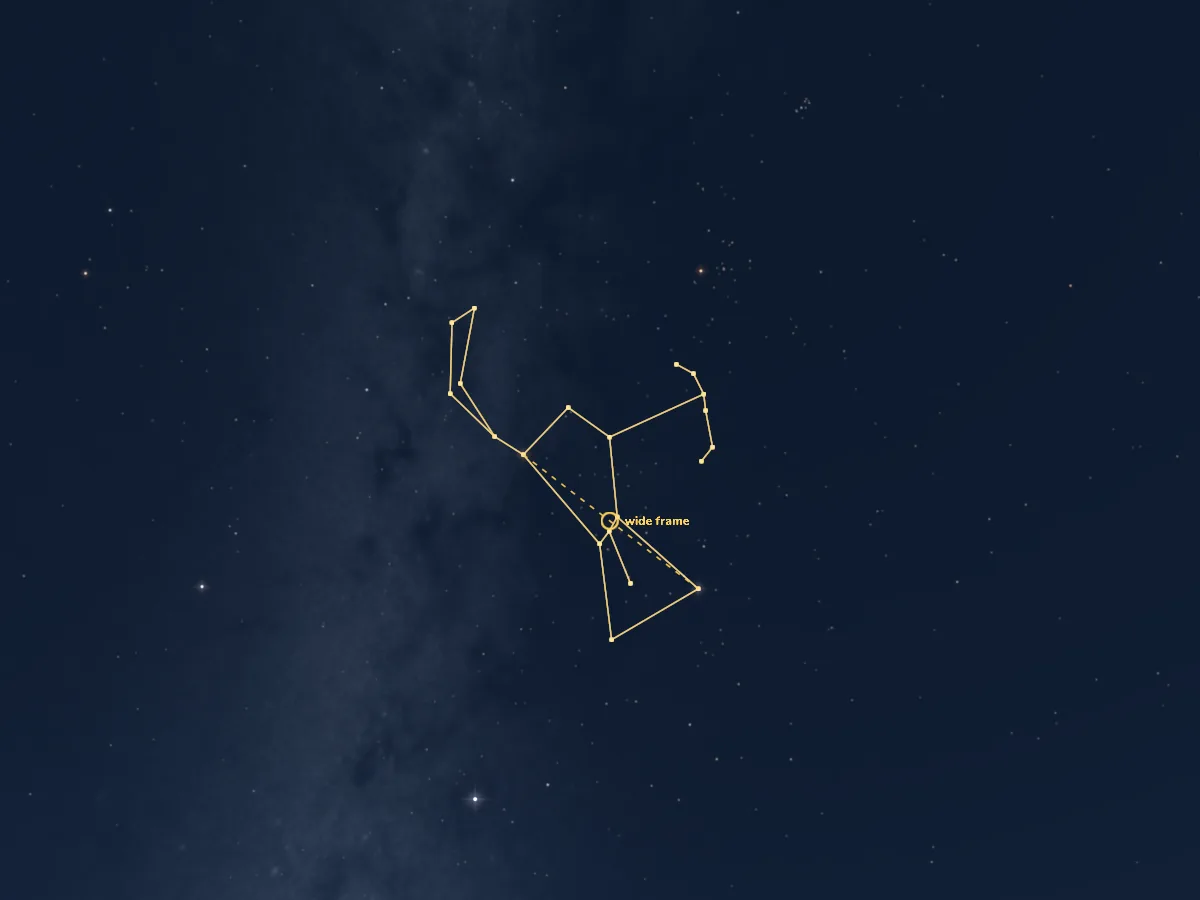
References & image credits
Editorial check: 31 October 2026 · Poppot
A reference view, not the sky above your location right now. The orientation changes with your location and the time. About the sky map →
The guided sky reuses the app’s lesson: HYG catalogue, observing night, camera route and constellation figures. Figures are teaching aids, not official constellation boundaries.