How to recognize Gemini, Castor and Pollux
Start from Orion: from Betelgeuse, its orange shoulder, travel well beyond until you reach two bright stars close together, Castor and Pollux, the heads of the Twins. From that pair, the stars of both bodies run back towards Orion.
- Orion
- Betelgeuse
- Pollux & Castor
- Gemini
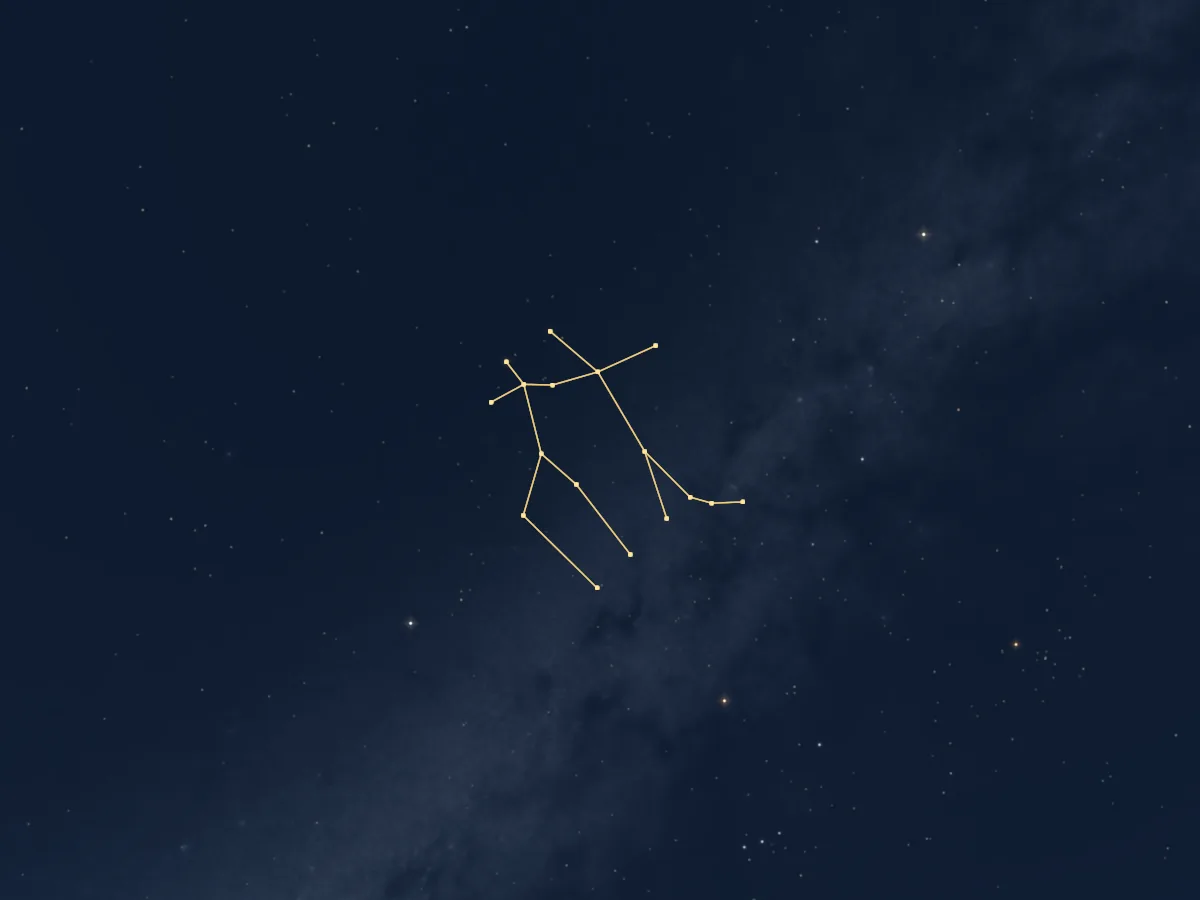
- 1 / 5
Start from Orion
Orion is the easiest constellation to recognise on winter evenings. Find its orange shoulder, Betelgeuse: that is your starting point.
Scroll: the sky guides you from star to star. - 2 / 5
Take a long step to Pollux
Travel well beyond Betelgeuse, away from the Belt, until you reach Pollux, the brighter of two stars close together.
- 3 / 5
Check the close pair
Castor sits right next to Pollux. These two stars are the heads of the Twins.
- 4 / 5
Follow both long bodies
From each head, a branching chain of stars runs back towards Orion. Check both bodies to confirm Gemini.
- 5 / 5
Now find Gemini without help
Lines and markers are gone. Start from Orion and Betelgeuse, take the long step to the paired heads, then follow both bodies.
When to look
Gemini is a good evening target around January to April across much of both hemispheres. It generally rises higher from northern locations; southern observers may see the figure inverted.
Avoid this mix-up
Any two nearby stars are not automatically Gemini. Confirm them using both the double figure and the surrounding sky.
Is Castor brighter than Pollux?
No. Pollux appears brighter to the unaided eye. Star names and letters do not always follow a brightness ranking.

Learn it with Poppot
Practise recognizing the stars, then find your way with your phone in your pocket.
Start learning freeKeep exploring
All guides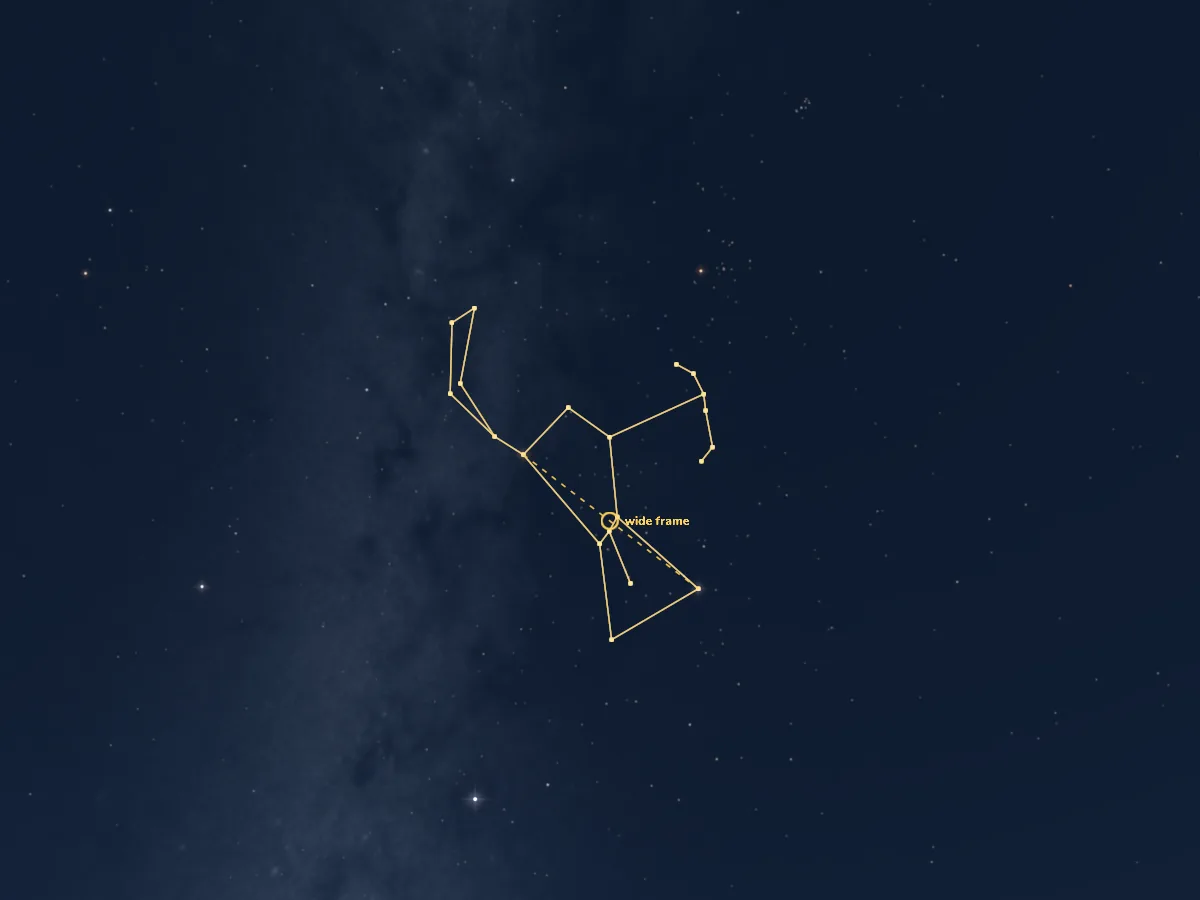
References & image credits
Editorial check: 31 October 2026 · Poppot
A reference view, not the sky above your location right now. The orientation changes with your location and the time. About the sky map →
The guided sky reuses the app’s lesson: HYG catalogue, observing night, camera route and constellation figures. Figures are teaching aids, not official constellation boundaries.